
Why Do Players Wear Wristbands? Sports Explained
Watch any game from courtside or the cheap seats, and you will spot them. Wristbands on tennis players, on point guards, on quarterbacks, on softball catchers, even on the bassist warming up for halftime. Every sport seems to have its own reason for strapping fabric or silicone around the wrist, and the reasons are surprisingly varied. Some are about sweat. Some are about strategy. Some are about identity.
Here is a sport-by-sport breakdown of why players wear wristbands, with the honest answer for each.
Why Do Players Wear Wristbands? The Short Answer
Across sports, wristbands serve four main jobs: managing sweat, protecting the wrist, carrying information, and signaling identity. A tennis player and a football quarterback both wear wristbands, but for completely different reasons. Knowing which job the band is doing makes the rest of the conversation a lot clearer.
The four core reasons players wear wristbands:
- Sweat control. Terry cloth bands absorb sweat so it does not drip into the eyes or onto the grip.
- Wrist support. Some bands offer light compression to reduce strain during repetitive motion.
- Information. Football and baseball use specialized wristbands with playbook cards or signal cards tucked inside.
- Identity. Silicone wristbands carry team colors, cause messages, sponsor logos, or tributes.
Most pros wear wristbands for a mix of these reasons. The band on a player's arm is rarely doing only one job.
Why Do Tennis Players Wear Wristbands?
Tennis is the sport that put wristbands on the map. A tennis player sweats heavily during a match, and that sweat runs from the forearm down to the racquet handle, which kills grip. A terry cloth wristband absorbs the sweat before it reaches the hand. Players also use the band to wipe their foreheads between points without breaking the rhythm.
Beyond sweat, some tennis players wear thin compression wristbands for support during recurring wrist strain. Iconic players like Roger Federer and Rafael Nadal made oversized wristbands part of their visual brand, but the function came first, and the fashion followed.
Why Do Basketball Players Wear Wristbands?
Basketball players wear wristbands for many of the same reasons tennis players do, plus a few that are unique to the court. The terry cloth band soaks up sweat from the forearm so the ball stays dry in the hand, which matters during free throws and ball-handling. Players who shoot from the perimeter especially want a dry palm for a clean release.
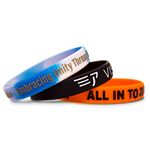
The other big reason is team and personal identity. Custom silicone bands in school or franchise colors, often with messages or tributes, show up under jerseys and on warm-up arms. Many youth and college programs order custom silicone wristbands for team spirit, fundraising, or memorial seasons.
Why Do NBA Players Wear Wristbands?
NBA players take everything basketball wristbands do and stack visibility on top of it. With cameras tracking every player on the floor, a wristband becomes a small billboard. Players wear them for sweat control, sure, but also for tributes to lost loved ones, sponsor branding, charity causes, and personal style. Pregame fashion is part of the league's culture, and the wristband is one of the easiest pieces to swap out.
A few common reasons NBA players wear wristbands beyond sweat:
- Tribute messages for family members or fallen teammates.
- Cause and awareness bands are tied to league-wide campaigns.
- Sponsor branding from shoe or apparel deals.
- Style choices that match a player's signature look on the court.
Why Do Football Players Wear Wristbands?
Football wristbands often carry a playbook. Quarterbacks and middle linebackers wear a thick wristband with a clear plastic flap that holds a printed card listing dozens of plays, formations, or defensive calls. When the coach signals in a number from the sideline, the player flips the card and reads the play. The wristband replaces a chunk of the old huddle and speeds the offense up considerably.
Off the play sheet side of things, football players also wear sweatbands and team-spirit silicone bands. College programs use custom silicone bands for cause weeks (military appreciation, awareness games, memorial seasons), and youth football teams order them for fundraising and team unity.
Why Do Baseball Players Wear Wristbands?
Baseball wristbands serve two roles. Pitchers and catchers often wear a wristband with a signal card slipped into a plastic sleeve, listing pitches, locations, and pickoff signs. The wristband helps the battery stay on the same page without flashing fingers that a runner on second could decode.
A secondary role is team spirit and tribute. High school and college baseball programs frequently order silicone bands in team colors for players, families, and fans. The same idea scales down to youth leagues and tournament travel teams, where the wristband doubles as a souvenir for parents.
Why Do Softball Players Wear Wristbands?
Softball almost mirrors baseball on this one. Pitch-calling wristbands with a clear sleeve and a numbered card are standard for catchers, pitchers, and sometimes the entire infield. The card lets the team run signals quickly without giving anything away to the opposing dugout. Travel teams use them just as heavily as varsity programs.
The team identity layer is even bigger in softball. Tournament weekends bring out custom silicone wristbands by the box, with team names, colors, and rallying mottos. Fundraising for travel costs is another reason softball families turn to silicone bands all season long.
Why Do Soccer Players Wear Wristbands?
Soccer is the outlier on this list. Outfield players rarely wear sweatbands because they do not handle a ball with their hands, so the sweat-on-grip problem mostly does not apply. Goalkeepers are the exception. A keeper wears wristbands for sweat absorption and to wipe gloves clean between saves, which matters a lot in humid conditions.
Where soccer does use wristbands heavily is for cause awareness and tribute. Players across leagues wear rainbow bands for inclusion campaigns, black bands for memorial matches, and team-color silicone bands for fundraising and youth programs. Custom silicone wristbands for clubs and academies are a steady use case.
Why Do Bass Players Wear Wristbands?
Stepping off the field for a moment, bass guitar players also wear wristbands, and for reasons that overlap with athletes more than you would expect. A long set means a sweaty wrist, and sweat plus a glossy bass body equals friction and stickiness. A wristband wicks the sweat away and creates a smoother surface for the forearm to glide across the instrument.
Bass players also wear wristbands for style, brand identity with their band, and the occasional bit of wrist support during marathon sets. The function is small but real, especially on hot festival stages.
Custom Wristbands for Teams, Schools, and Causes
Wristband Resources does not make terry cloth sweatbands, but for everything else on the team-identity side, the brand is the right place to look. Team silicone bands, school spirit bracelets, cause-awareness bands, and fan admission wristbands all sit squarely in the product line.
A few popular options for sports use:
- Team spirit: Custom silicone wristbands in school or club colors with names, mottos, or jersey numbers.
- Fundraising: Silicone bracelets sold to fans and families to raise money for travel, equipment, or scholarships.
- Game-day admission: Custom Tyvek® wristbands for fans entering the gym, field, or stadium.
- Premium souvenirs: Cloth wristbands with sublimated logos for season ticket holders or championship runs.
- Sports-specific options: Browse the sports wristbands collection for ready inspiration.
For school athletic departments and youth programs, especially, silicone wristbands sit at a price point that lets fundraising actually pay off.
Final Whistle
Players wear wristbands for sweat, support, signals, and identity, and the exact reason depends entirely on the sport. A tennis player and a softball catcher are both reaching for the wrist, but they are solving different problems. Once you know which job the wristband is doing, the gear choice gets a lot easier.
If your team, school, or league wants custom wristbands for spirit, fundraising, or game-day admission, Wristband Resources has the materials and turnaround to make it work.
Pick your starting point. To put your team's name on a band for spirit, fundraising, or game-day admission, design custom team wristbands at wristband.com or call 888-256-0816.
Frequently Asked Questions
Do wristbands actually improve athletic performance?
Indirectly, yes. Wristbands manage sweat and keep grip clean, which helps maintain shooting, throwing, or racquet handling consistency during long matches.
What material is used for sweat-absorbing wristbands?
Terry cloth and similar cotton-poly blends are standard for sweat absorption. Silicone and Tyvek® wristbands are made for team identity or admission, not sweat control.
Why do football quarterbacks wear thick wristbands on both arms?
The thick band on the throwing-arm wrist usually holds a play card with the offense's call sheet, so the quarterback can read the play after the coach signals it in.
Are signal-calling wristbands legal in high school and college baseball?
Yes, widely. Pitch-calling and signal wristbands are common in high school, college, and pro baseball and softball, though specific rules vary by league.
Why do some players wear wristbands above the elbow?
Players often wear longer compression sleeves or arm bands on the forearm or biceps for sweat, support, or style. The function is similar to a wristband, just covering more of the arm.
Can I order custom wristbands for my youth sports team?
Yes. Custom silicone wristbands in team colors with names, mottos, or jersey numbers are a common order for youth, school, club, and travel teams.
Share

Leave A Comment


Your email address will not be published. Required fields are marked with *